





When was the last time you had your car’s oil changed? What about the coolant? Do you have enough windshield wiper fluid to get through the next few months? Thinking about all the different fluids in your car can be overwhelming. It can seem like there are dozens of them that need to be changed, flushed, or refilled often.
But you don’t need to worry, because we’re here to help you. By the end of this post, you’ll know the difference between brake and transmission fluid colors, how often you should change your car’s oil, and so much more.
The Main Types of Car Fluid
Most cars have seven types of fluid located throughout their various systems. They are:
- Engine Oil: Also known as motor oil, this fluid keeps multiple parts of the engine lubricated and running smoothly, including pistons, pumps, and bearings. It also prevents these parts from overheating. Engine oil is generally gold in color.
- Transmission Fluid: This fluid lubricates the different elements of both manual and automatic transmissions. A manual transmission has gears and synchros in it, while an automatic transmission has a clutch pack and gears; both need fluid to reduce friction. Your transmission fluid’s color is usually red.
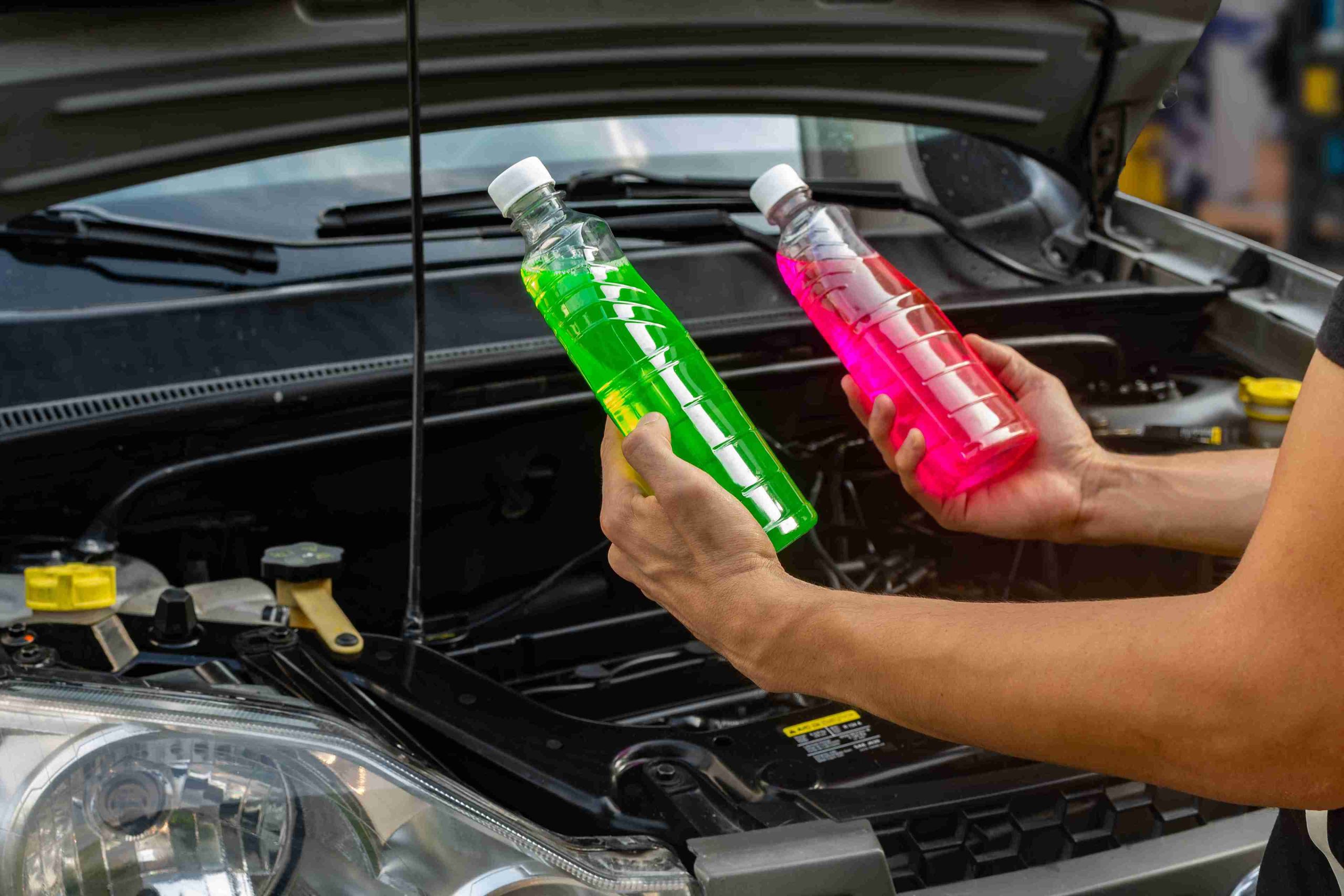
- Engine Coolant: This fluid does exactly what you think it does: it keeps the engine cool. Without it, the whole thing would get too hot and seize up. It comes in many bright colors, including yellow, pink, and green.
- Brake Fluid: Brake fluid lubricates all the parts of your braking system, such as the pistons, valves, and antilock brakes, in order to help your car come to a full and complete stop. It also absorbs water to prevent all those parts from rusting and corroding. Brake fluid is often clear.
- Power Steering Fluid: If your car turns smoothly, that’s probably thanks to the power steering system and the fluid inside, which acts as both a hydraulic force and a lubricant. It lasts longer than the other fluids on this list, but when it gets low, your vehicle can have a hard time turning around corners. Power steering fluid is often red.
- Differential Fluid: This fluid lubricates the differentials at the rear of your car if you have two-wheel drive and at the front and rear if you have four-wheel drive. The differentials are made up of gears, axles, and your car’s wheels. Without the differential fluid, your car could not move. Differential fluid is usually golden in color.
- Windshield Washer Fluid: As the name indicates, this fluid keeps your windshield wipers moving. While it’s not necessary for making the car go, it keeps your windshield clear of dirt and precipitation. Have you ever driven your car when it doesn’t have this fluid? If you have, you’ll understand how quickly your windshield can accumulate dirt, dust, and other particles that make it hard to see as you drive. This can become a particular problem if you live in an area with winter weather, like Kansas City. Windshield washer fluid is often a bluish color.
How to Take Care of These Fluids and Why
All these fluids need to be changed, flushed, or refilled periodically. Here’s when, how, and why you should have a mechanic perform these maintenance tasks:
- Engine Oil Maintenance: The most common advice is to change your oil every three months or 3,000 miles. However, before you do that, check your owner’s manual to see if it recommends that amount or one that’s longer or shorter. The amount of engine oil maintenance your car needs can definitely vary based on its make and model, as well as the type of oil that’s used.
- Transmission Fluid Maintenance: This fluid needs to be changed or flushed every 25,000 to 40,000 miles. If it isn’t, your car could experience a transmission failure, which can be extremely costly to fix.
- Engine Coolant Maintenance: As with engine oil maintenance, you should check your owner’s manual to see how often you should flush your coolant. It needs to be flushed periodically because it takes in contaminants from the engine parts and becomes quite dirty over time.
- Brake Fluid Maintenance: Brake fluid needs to be flushed around every 25,000 miles, or roughly every time you have your brake pads and rotors replaced. This fluid needs periodic flushing because it absorbs water, which can cause your brakes’ parts to rust and corrode. That could make driving dangerous.
- Power Steering Fluid Maintenance: This fluid’s maintenance often gets neglected, but as we mentioned a moment ago, it does last quite a bit longer than most of the other fluids on this list. It can be changed around 60,000 to 80,000 miles. If you don’t stick to that maintenance interval, your power steering may become less responsive and eventually break down.
- Differential Fluid Maintenance: Like power steering fluid, differential fluid eventually goes bad, but it also lasts for quite a while. It needs to be changed around every 80,000 to 120,000 miles, but as always, you should check your owner’s manual for your model’s recommended maintenance interval.
- Windshield Washer Fluid Maintenance: This fluid doesn’t have general maintenance interval recommendations, but you can perform this maintenance yourself or have a mechanic do it for you. Some retail places like grocery stores sell windshield washer fluid over the counter, particularly during winter. If you want to refill it yourself, you can find this fluid’s container right underneath your car’s hood. However, if you’re not comfortable doing that, you can ask your mechanic to top it off during an oil change or another routine maintenance job.
Change and Flush Automotive Fluids in Overland Park, KS
If you need to schedule any of these maintenance services, reach out to us today. We help people keep their cars running smoothly and understand things like how to check transmission fluid and how to check if your fluid is running low. We’re available to customers in and around Shawnee, KS and Leawood, KS as well.


